CCT8 associates with the MYO10 motor domain and regulates filopodia and breast cancer cell invasion
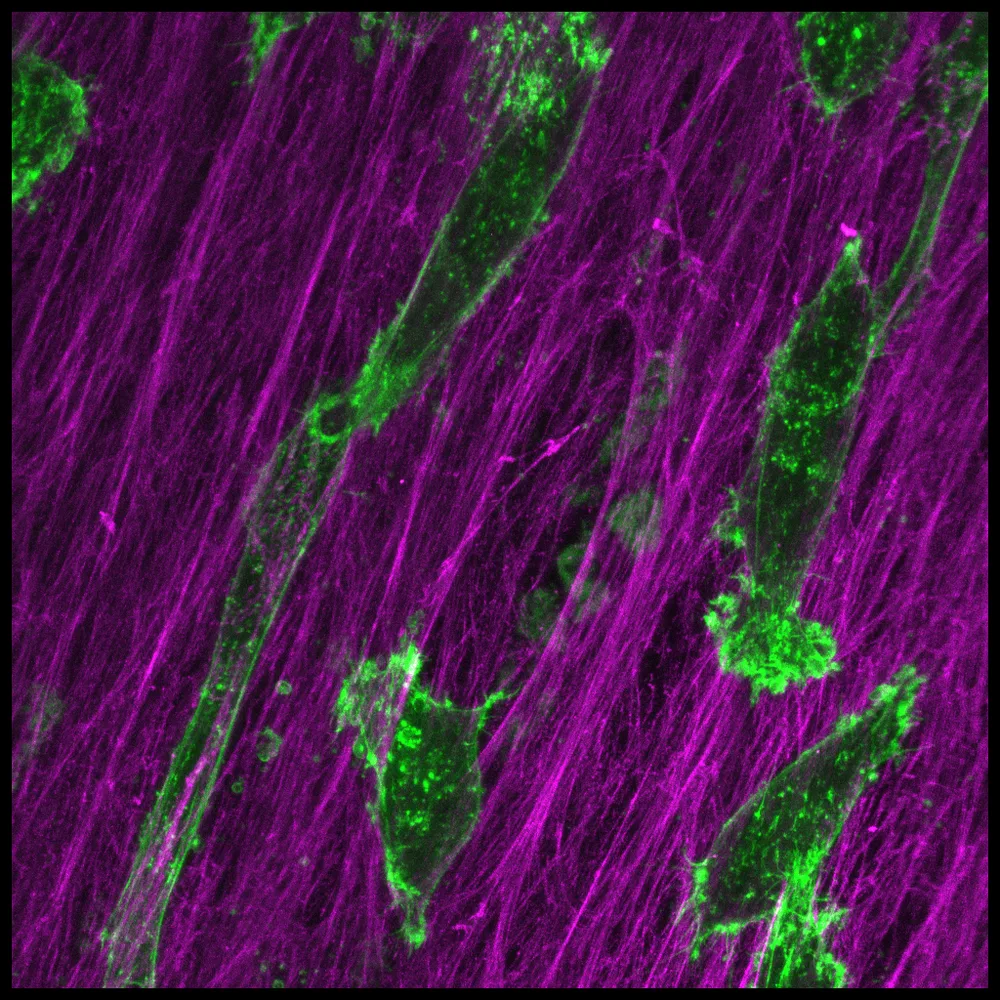
CCT8 associates with the MYO10 motor domain and regulates filopodia and breast cancer cell invasion
Journal of Cell Science · 2026 · doi:10.1242/jcs.265278Open access
Cancer cells utilize filopodia to explore, adhere to and invade their surrounding microenvironment, yet the protein networks that organize these protrusions remain incompletely defined. To uncover the molecular machinery underlying MYO10-positive filopodia, we targeted the fast biotin ligase TurboID to the motor protein MYO10. Proximity biotinylation in two cell types revealed hundreds of potential MYO10 interactors. A targeted microscopy and siRNA screen identified MINK1, SCRIB, CSNK1A1 and CCT8 as new regulators of MYO10-mediated filopodia formation. Focusing on one of the interactors shared between cell lines, CCT8, known as a subunit of the chaperonin TCP1 ring complex (TRiC), we found that CCT8 associates with the MYO10 motor domain and regulates MYO10 filopodia independently of the TRiC. Depleting CCT8 affected filopodia dynamics and impaired cell spreading, migration and invasion in breast cancer cells. These findings establish CCT8 as a TRiC-independent regulator of MYO10 filopodia across diverse cancer cell types.